


Other ways to say this shows can help make your writing more polished, engaging, and professional. The phrase “this shows” is commonly used to introduce evidence, explain findings, or highlight the significance of a point. While it is clear and effective, repeating it too often can make essays sound repetitive and less sophisticated.
Many students, professionals, and writers search for alternatives because they want to improve their vocabulary and create stronger arguments. Whether you’re writing an academic essay, research paper, business report, or casual analysis, using different expressions can enhance readability and leave a better impression on your audience.
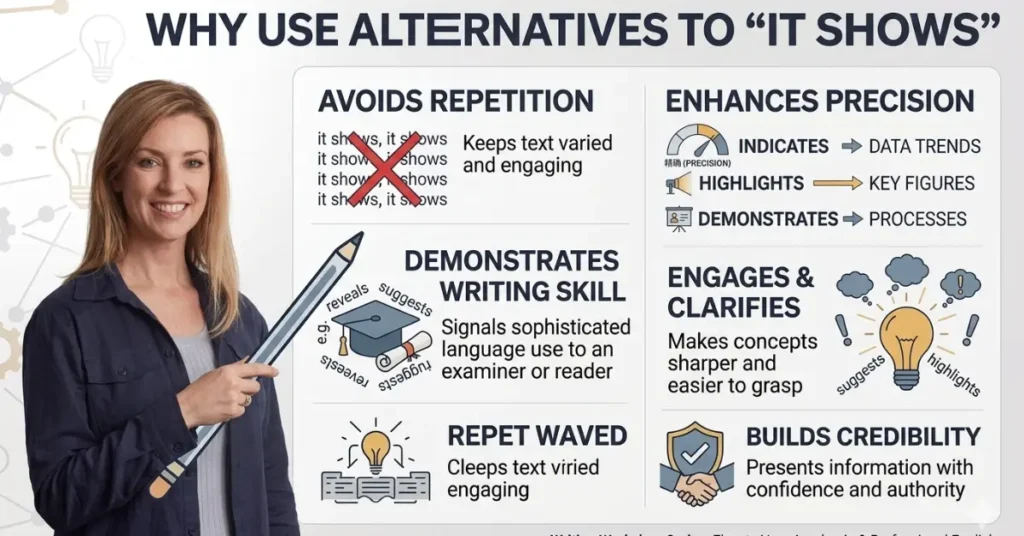
Why Use Alternatives to Other Ways to Say This Shows
Using a variety of expressions instead of repeatedly saying “this shows” helps improve the flow and quality of your writing. It demonstrates a broader vocabulary, makes your content more engaging, and prevents unnecessary repetition. Additionally, different alternatives can better suit formal, professional, academic, or casual situations. By choosing the right phrase, you can communicate ideas more clearly while making your writing sound more confident and polished.
1. This Demonstrates
Meaning: Indicates clear evidence or proof of something.
Usage: Commonly used in academic and professional writing.
Tip: Excellent for formal essays and reports.
Examples:
- This demonstrates the importance of effective communication.
- The survey results demonstrate a growing trend among consumers.
- This demonstrates why preparation is essential for success.
- The evidence demonstrates a strong connection between the two factors.
2. This Indicates
Meaning: Suggests or points toward a conclusion.
Usage: Frequently used when discussing evidence or data.
Tip: Works well in analytical writing.
Examples:
- This indicates a significant improvement in performance.
- The findings indicate a change in customer behavior.
- This indicates that further research is necessary.
- The results indicate a positive outcome.
3. This Reveals
Meaning: Makes something known or visible.
Usage: Used when uncovering insights or hidden information.
Tip: Adds impact to analytical discussions.
Examples:
- This reveals the true cause of the issue.
- The data reveals an unexpected pattern.
- This reveals how important teamwork can be.
- The report reveals several areas for improvement.
4. This Illustrates
Meaning: Clarifies or explains through examples.
Usage: Common in essays and educational writing.
Tip: Ideal when providing supporting evidence.
Examples:
- This illustrates the challenges faced by small businesses.
- The example illustrates the author’s main argument.
- This illustrates why planning ahead matters.
- The graph illustrates recent market changes.
5. This Highlights
Meaning: Draws attention to a key point.
Usage: Used to emphasize important information.
Tip: Great for persuasive and professional writing.
Examples:
- This highlights the need for stronger policies.
- The findings highlight customer preferences.
- This highlights a critical weakness in the system.
- The report highlights several opportunities for growth.
6. This Suggests
Meaning: Implies a possible conclusion.
Usage: Common when evidence is not entirely certain.
Tip: Use when making cautious interpretations.
Examples:
- This suggests that training improves performance.
- The results suggest a positive relationship.
- This suggests a need for additional testing.
- The evidence suggests a shift in public opinion.
7. This Confirms
Meaning: Verifies or supports a conclusion.
Usage: Used when evidence strongly supports an idea.
Tip: Effective for research papers.
Examples:
- This confirms the original hypothesis.
- The findings confirm previous studies.
- This confirms the importance of regular practice.
- The data confirms customer satisfaction trends.
8. This Proves
Meaning: Establishes something as true.
Usage: Used when evidence is conclusive.
Tip: Avoid overusing in academic writing unless certainty exists.
Examples:
- This proves the effectiveness of the strategy.
- The experiment proves the concept works.
- This proves that persistence pays off.
- The evidence proves the claim beyond doubt.
9. This Reflects
Meaning: Represents or mirrors something.
Usage: Often used in discussions of attitudes or trends.
Tip: Useful in analytical essays.
Examples:
- This reflects changing consumer habits.
- The results reflect broader social trends.
- This reflects the company’s values.
- The findings reflect public concerns.
10. This Signifies
Meaning: Indicates deeper meaning or importance.
Usage: Common in literary and academic analysis.
Tip: Adds sophistication to writing.
Examples:
- This signifies a major turning point.
- The symbol signifies hope and renewal.
- This signifies progress within the organization.
- The result signifies a positive development.
11. This Implies
Meaning: Suggests without directly stating.
Usage: Useful for interpretation and analysis.
Tip: Works well in literary essays.
Examples:
- This implies a lack of preparation.
- The statement implies future growth.
- This implies that changes are needed.
- The evidence implies a connection.
12. This Underscores
Meaning: Emphasizes importance.
Usage: Used to stress a key point.
Tip: Excellent for formal writing.
Examples:
- This underscores the value of education.
- The report underscores the need for reform.
- This underscores the urgency of the issue.
- The data underscores customer expectations.
13. This Emphasizes
Meaning: Gives special importance to something.
Usage: Common in essays and presentations.
Tip: Strong replacement for repetitive wording.
Examples:
- This emphasizes the role of leadership.
- The findings emphasize teamwork.
- This emphasizes the need for innovation.
- The example emphasizes personal responsibility.
14. This Supports
Meaning: Provides evidence in favor of an idea.
Usage: Common in argumentative writing.
Tip: Great for presenting evidence.
Examples:
- This supports the author’s argument.
- The results support the conclusion.
- This supports the proposed solution.
- The evidence supports previous research.
15. This Establishes
Meaning: Shows something clearly and firmly.
Usage: Used in formal and academic contexts.
Tip: Effective in research papers.
Examples:
- This establishes a clear relationship.
- The study establishes a reliable pattern.
- This establishes credibility.
- The evidence establishes the main point.
16. This Evidences
Meaning: Serves as proof or evidence.
Usage: Often found in academic and legal writing.
Tip: Best suited for highly formal contexts.
Examples:
- This evidences the effectiveness of the policy.
- The findings evidence a growing concern.
- This evidences significant progress.
- The report evidences changing attitudes.
17. This Depicts
Meaning: Portrays or describes clearly.
Usage: Common in literature and visual analysis.
Tip: Useful when discussing imagery or representation.
Examples:
- This depicts the realities of urban life.
- The painting depicts social change.
- This depicts the character’s growth.
- The chart depicts yearly performance trends.
18. This Portrays
Meaning: Presents or represents something.
Usage: Frequently used in literary analysis.
Tip: Ideal when discussing themes and characters.
Examples:
- This portrays resilience in difficult times.
- The novel portrays social inequality.
- This portrays a realistic perspective.
- The scene portrays emotional conflict.
19. This Clarifies
Meaning: Makes something easier to understand.
Usage: Used when explaining complex ideas.
Tip: Helpful in educational writing.
Examples:
- This clarifies the author’s intention.
- The example clarifies the concept.
- This clarifies why the change occurred.
- The explanation clarifies the process.
20. This Verifies
Meaning: Confirms accuracy or truth.
Usage: Common in research and technical writing.
Tip: Use when discussing validated information.
Examples:
- This verifies the findings.
- The test verifies product quality.
- This verifies the original claim.
- The data verifies customer feedback.
21. This Validates
Meaning: Confirms legitimacy or correctness.
Usage: Common in academic and scientific writing.
Tip: Useful when discussing research outcomes.
Examples:
- This validates the proposed theory.
- The study validates earlier findings.
- This validates customer concerns.
- The evidence validates the conclusion.
22. This Corroborates
Meaning: Provides supporting evidence.
Usage: Frequently used in formal reports.
Tip: Adds sophistication to academic writing.
Examples:
- This corroborates previous research.
- The witness statement corroborates the claim.
- This corroborates the findings.
- The data corroborates historical records.
23. This Exemplifies
Meaning: Serves as a strong example.
Usage: Useful in analytical and educational contexts.
Tip: Excellent for demonstrating concepts.
Examples:
- This exemplifies effective leadership.
- The case study exemplifies innovation.
- This exemplifies professional conduct.
- The project exemplifies teamwork.
24. This Conveys
Meaning: Communicates a message or idea.
Usage: Common in communication and literature.
Tip: Useful when discussing meaning.
Examples:
- This conveys a sense of urgency.
- The message conveys optimism.
- This conveys the author’s perspective.
- The image conveys strong emotions.
25. This Expresses
Meaning: Communicates feelings, thoughts, or ideas.
Usage: Common in creative and academic writing.
Tip: Ideal for discussing tone and meaning.
Examples:
- This expresses concern about the issue.
- The statement expresses gratitude.
- This expresses the author’s viewpoint.
- The poem expresses deep emotion.
26. This Points To
Meaning: Directs attention toward a conclusion.
Usage: Used in both formal and informal writing.
Tip: Slightly less formal than other alternatives.
Examples:
- This points to a need for change.
- The evidence points to a common cause.
- This points to future growth.
- The results point to increased demand.
27. This Brings Attention To

Meaning: Focuses attention on something important.
Usage: Useful in reports and discussions.
Tip: Good for highlighting concerns.
Examples:
- This brings attention to safety issues.
- The report brings attention to customer needs.
- This brings attention to an overlooked problem.
- The findings bring attention to emerging trends.
28. This Makes Clear
Meaning: Explains something in an understandable way.
Usage: Common in everyday and academic writing.
Tip: Simple and reader-friendly.
Examples:
- This makes clear why action is necessary.
- The results make clear the benefits.
- This makes clear the author’s intention.
- The evidence makes clear the problem.
29. This Reinforces
Meaning: Strengthens an existing idea or argument.
Usage: Frequently used in persuasive writing.
Tip: Great for supporting key points.
Examples:
- This reinforces the central argument.
- The evidence reinforces the conclusion.
- This reinforces the importance of preparation.
- The study reinforces previous findings.
30. This Demonstrates Clearly
Meaning: Shows something in a very obvious way.
Usage: Used when emphasizing strong evidence.
Tip: Ideal for formal and academic writing.
Examples:
- This demonstrates clearly why the policy succeeded.
- The findings demonstrate clearly the benefits.
- This demonstrates clearly the need for reform.
- The evidence demonstrates clearly that change is possible.
READ MORE<<< 31 Funny Ways to Say Good Morning Creative and Unique
Frequently Asked Questions
What can I say instead of “this shows” in an essay?
You can use alternatives such as this demonstrates, this illustrates, this reveals, this indicates, and this highlights depending on the context.
Is “this shows” formal enough for academic writing?
Yes, it is acceptable in academic writing, but using varied alternatives can make your work sound more sophisticated and engaging.
What is the best formal alternative to “this shows”?
This demonstrates, this indicates, and this establishes are among the most professional and formal replacements.
Can I use “this suggests” instead of “this shows”?
Yes, especially when the evidence points toward a conclusion rather than proving it with certainty.
Why should I use different phrases instead of repeating “this shows”?
Using different expressions improves readability, strengthens your vocabulary, and makes your writing more polished.
Conclusion
Using a variety of other ways to say this shows can significantly improve the quality of your writing. Whether you’re working on an essay, report, research paper, or professional document, replacing repetitive phrases with stronger alternatives helps create a more engaging and polished piece of content.
The best alternative depends on your purpose and audience. Some phrases work better in formal academic settings, while others fit casual or professional communication. By expanding your vocabulary and choosing the right expression for each situation, you can communicate ideas more effectively and make your writing stand out for all the right reasons.